Cornerstones of Maine Hosts Advanced ERP Training for OCD Treatment, Bringing Together Regional Clinical Leaders
Clinical Directors from Cornerstones of Maine completed a two-day, 12-CE training in Exposure and Response Prevention,
Press Release Disclaimer: This is a press release distributed through the XPR Media network. It has not been independently verified by our newsroom.

Clinical Directors from Cornerstones of Maine completed a two-day, 12-CE training in Exposure and Response Prevention, hosted at their Biddeford campus.
BIDDEFORD, ME, UNITED STATES, September 15, 2026 /EINPresswire.com/ — Cornerstones of Maine recently hosted a two-day continuing education training focused on Exposure and Response Prevention (ERP), the leading evidence-based treatment for obsessive-compulsive disorder, welcoming outside clinical experts and regional colleagues to its Biddeford campus.
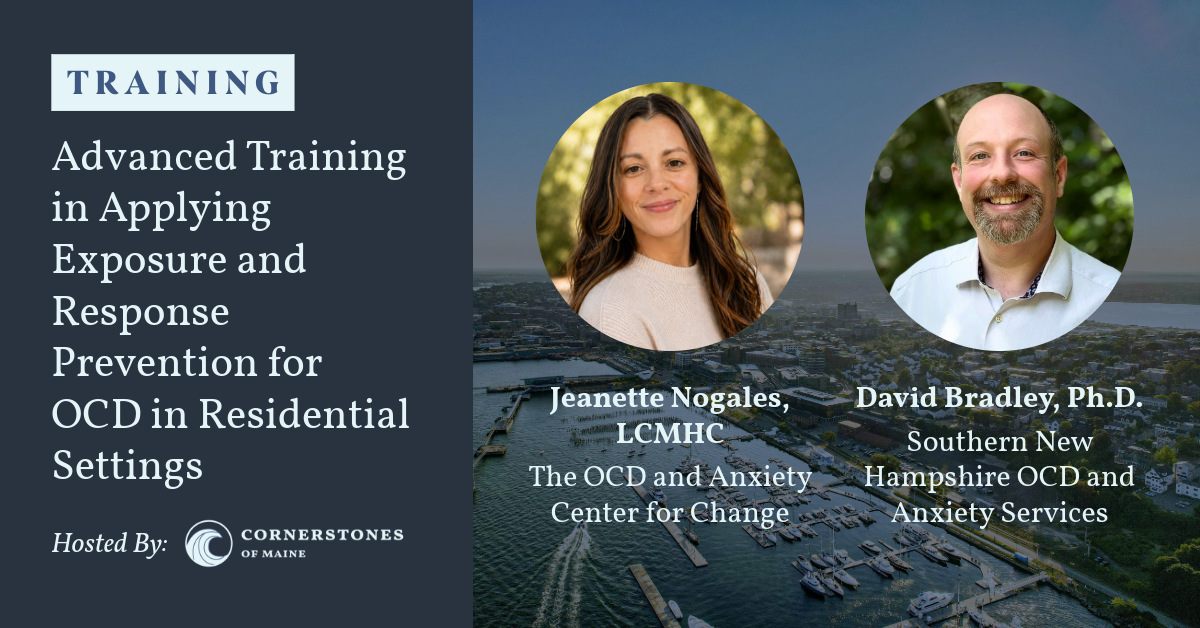
The training, “Advanced Training in Applying Exposure and Response Prevention for OCD in Residential Settings,” was led by Jeanette Nogales, LCMHC, of The OCD and Anxiety Center for Change, and David Bradley, Ph.D., of Southern New Hampshire OCD and Anxiety Services. All of Cornerstone’s clinical directors attended, along with clinical staff from Summit Achievement, who joined for the two days of instruction.
“Investing in training like this keeps our clinical team’s skills sharp and directly benefits the young adults and families we serve,” said Beth Caron, LCSW, CCS, Clinical Director at the Residential program.
A Structured Approach to a Complex Diagnosis
ERP is widely regarded as the most effective treatment approach for OCD, but applying it well requires more than familiarity with the model. The training was designed to build both foundational and advanced clinical skill through lecture, role-play demonstration, case presentation, and hands-on practice.
The first day focused on the core mechanics of ERP: how it works, why it works, and how to implement it with clients experiencing a range of obsessive-compulsive symptoms. The morning of the second day moved into more advanced clinical territory, including how to address family accommodation patterns, how to integrate acceptance and commitment therapy alongside ERP, and how to differentiate OCD from other conditions that can present with overlapping symptoms.
The final afternoon turned to a question many outpatient-trained clinicians rarely have to answer: what does ERP look like inside a residential setting. Attendees worked through the practical realities of applying the model in a live-in treatment environment, including how to engage support staff who interact with clients throughout the day, how to build referral relationships for step-down care, how to prepare families ahead of discharge, and how to help clients carry the skills they build in treatment into life outside of it.
Building Connection Across Regional Programs
While Cornerstones of Maine organized and hosted the training, the two visiting experts led the instruction, and clinical staff from Summit Achievement took part alongside the Cornerstones team throughout both days. Bringing clinicians from a neighboring program into the room reflects an approach Cornerstones of Maine takes seriously: strong clinical care benefits from shared learning across programs, not just within them.
For the Cornerstones and Rubedo clinical directors, the training offered a chance to deepen shared clinical language around a diagnosis that shows up often in the young adult population Cornerstones serves, and to bring a consistent, well-supported approach to ERP across every level of the organization’s care.
An Ongoing Investment in Clinical Practice
The ERP training adds to a broader pattern at Cornerstones of Maine of prioritizing continuing education for its clinical staff. As treatment approaches evolve and the needs of the young adults in residential and transitional living programs grow more complex, the organization continues to look for opportunities to bring outside expertise directly to its team.
Cornerstones of Maine plans to build on this training in ongoing clinical supervision and case consultation, helping ensure the skills introduced during the two days translate into daily practice across the organization’s programs.
To learn more about Cornerstones of Maine, visit https://cornerstonesofmaine.com/.
About Cornerstones of Maine
Cornerstones of Maine is a clinician-owned behavioral health treatment organization based in Biddeford, Maine, serving adults ages 18 to 30. The organization provides Residential Treatment, Long-Term Transitional Living, and Executive Function Coaching for young adults navigating mental health, substance use, and co-occurring challenges, with a focus on building the clinical foundation and life skills needed for lasting independence.
Bogie Foden, LICSW, MS
Cornerstones of Maine
+1 207-831-3941
cornerstonesofmaine.com
Visit us on social media:
LinkedIn
Instagram
Facebook
Legal Disclaimer:
EIN Presswire provides this news content “as is” without warranty of any kind. We do not accept any responsibility or liability
for the accuracy, content, images, videos, licenses, completeness, legality, or reliability of the information contained in this
article. If you have any complaints or copyright issues related to this article, kindly contact the author above.

Media gallery